
The 26-Point Gap: Why Employers Undercount the Caregivers on Their Payroll
Sep 30, 2026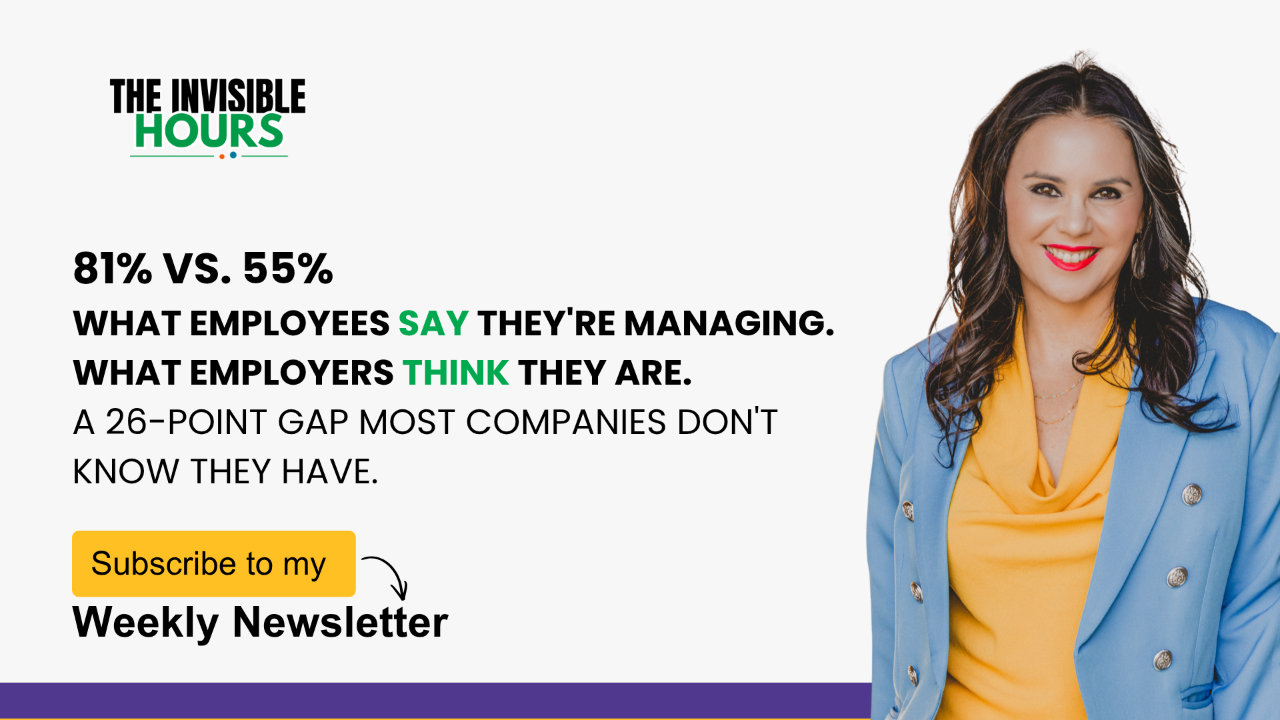
Ask an HR leader how many of her people are managing some kind of caregiving load right now, and she'll usually land around half. Ask the employees themselves, and the real number is closer to everyone.
The 26 points sitting between those two numbers are already running through your exit interviews and your retention data. Most leaders just haven't been shown where to look.
An HR leader reached out to me last year. She'd started noticing a pattern, in her turnover, in exit interviews, in the offhand comments people make on their way out, and she had a hunch it traced back to caregiving. She just didn't know how big the problem actually was, or what to do about it.
I asked her one question: "When was the last time you checked in with your direct reports about what's happening at home, not just at work?"
She paused. "I didn't even consider that." Then: "I'm going to go back and do it."
She did. And she was flabbergasted. All but two of her direct reports were managing some version of the same thing, either directly, through a spouse, or from a situation they'd already lived through. She'd suspected the problem existed. She had no idea it was nearly everyone.
Why do employers keep guessing wrong?
New data from Care.com's 2026 Future of Benefits Report puts a number on exactly what that HR leader stumbled into. Employers estimate that 55% of their workforce is stressed by caregiving responsibilities. The actual figure, reported by employees themselves, is 81%. That's the 26-point gap this post is named for.
In the same survey, 92% of employers agree they have a role to play in supporting caregivers, and 77% say they're concerned about caregiving-driven workforce stress. They're not indifferent. They're miscounting, and every leadership team running on the employer-side number is operating with a blind spot roughly the size of a quarter of their workforce.
The number stays hidden for a specific reason, even once someone goes looking for it. Only 37% of employees identify as a "caregiver," even though the majority already are one. Only 19% feel their caregiving responsibilities are well recognized at work.
That's not dishonesty. Someone managing a parent's medications, driving to two appointments a week, and fielding calls from an insurance company between meetings rarely thinks of themselves as a caregiver. In their own head, they're just handling some things for Mom. So when an engagement survey asks whether they're a caregiver, they answer no in good faith, and the number that comes back tells the company nothing is wrong.
This is the mechanism behind what I call hidden turnover: attrition your data will never flag as caregiving-related, because the person leaving never used that word for what they were carrying. The exit interview only ever asks about compensation and culture. It never asks about a parent's Tuesday oncology appointment.
What is this actually costing you?
Which brings me to a number that will make you angry in the right way. SHRM's 2026 Benefits Survey found that 27% of employers now offer pet health insurance. Only 2% offer any kind of elder or dependent care subsidy.
Nobody sat in a budget meeting and decided that on purpose. Pet insurance made it into the budget because someone could see it, price it, and defend it in a meeting. Caregiving strain doesn't show up on anyone's expense report until it shows up as a resignation, and by then it's a replacement cost, not a benefits line.
Every HR leader running a team of any size is likely sitting on some version of the same 26 points, whether or not anyone's asked the question yet.
What can you do about it this week?
You don't need a new benefit to close a 26-point recognition gap. You need a better question.
The HR leader in this story didn't fix anything with a program. She fixed it by asking, and then actually listening to what came back. That's the cheapest, fastest diagnostic available to you, and most leadership teams have never run it.
If you're wondering how wide this gap actually is inside your own organization (not the national average, yours), that's exactly what the Hidden Turnover Calculator is built to show you. Ten minutes, real numbers, a clearer picture of what unaddressed caregiving strain is costing you in retention.
Run the Hidden Turnover Calculator
You might not like the number. But you'll like it a lot more than finding out the hard way, one resignation letter at a time.
Onward,
Jaime
Jaime Roberts is the founder of The Help Project, where she helps employers turn eldercare from a hidden retention risk into a solved problem. She has spent more than 20 years in aging services, starting in direct care.
We hate SPAM. We will never sell your information, for any reason.